All sides expressed their views on the UN Secretary-General: urging the Taliban and other parties to exercise maximum restraint.
On August 15th, local time, Afghan President Ashraf Ghani left the country. On the same day, the Taliban in Afghanistan issued a statement through social media, approving armed personnel to enter Kabul, the capital of the country. Reuters quoted two senior Taliban commanders as saying that at present, the Taliban have taken control of the Afghan presidential palace.
In view of the current situation in Afghanistan, many parties have made statements.
Secretary-General of the United Nations:Urge the Taliban and other parties to exercise maximum restraint.
On the afternoon of August 15th, local time, the UN Security Council decided to hold an emergency meeting on the current situation in Afghanistan on the morning of 16th. UN Secretary-General Guterres will attend the meeting and make a report.
On the same day, the spokesman of the UN Secretary-General also issued a statement saying that he was concerned about the rapidly changing situation in Afghanistan and urged the Taliban and other parties to exercise maximum restraint, protect lives and ensure that humanitarian needs were met.
The statement called on the Taliban and other parties to ensure that international humanitarian law and the rights of all people are preserved and respected. He also called on all parties to ensure that humanitarian assistance is unimpeded.
In addition, the statement also said that the United Nations remains determined to promote a peaceful settlement of the Afghan issue.
US Congressman Cheney: The US government has an unshirkable responsibility for the situation in Afghanistan.
On August 15th, local time, US Republican Congresswoman Liz Cheney said in an interview with ABC that the US government has an unshirkable responsibility for the Taliban’s rapid takeover of Afghanistan.
Although the United States and NATO spent billions of dollars to establish Afghan security forces in the past two decades, the Taliban occupied almost the whole of Afghanistan in just over a week.
Cheney said that the impact of the current situation is not limited to Afghanistan and the United States, but global.
Russian Foreign Ministry: The world is watching with horror the consequences of American historical experiments.
On August 15th, Russian Foreign Ministry spokesperson Zacharova talked about the Afghan situation on social networking sites. She wrote: "The world is watching with horror the results of another historical experiment in the United States."
The Russian Foreign Ministry stated that it does not intend to evacuate the staff of the Russian Embassy in Kabul, and the diplomatic mission will operate normally. The Taliban will not only ensure the security of the Russian embassy, but also the security of diplomatic missions of other countries.
At the same time, Zamir Kablov, Special Representative of the Russian President for Afghanistan and Director of the Second Asia Department of the Russian Foreign Ministry, told the media that Russia is ready to cooperate with the Afghan Transitional Government, but at present it is not discussing whether to recognize the Taliban as the legitimate authority of the country.
Former Afghan President Hamid Karzai: Willing to seek a peaceful solution to the Afghan problem with the Taliban.

On the evening of August 15th, local time, former Afghan President Hamid Karzai delivered a video speech through his personal social media homepage, saying that he was willing to seek a peaceful solution to the Afghan issue with the Taliban.
In the video, Karzai made the above statement standing behind his three young daughters. He said that he and his children are still in Kabul, hoping to seek a peaceful solution to the Afghan issue through dialogue with Taliban leaders with "brotherhood" and "patriotism".
First Vice President of Afghanistan: Never bow to the Taliban.
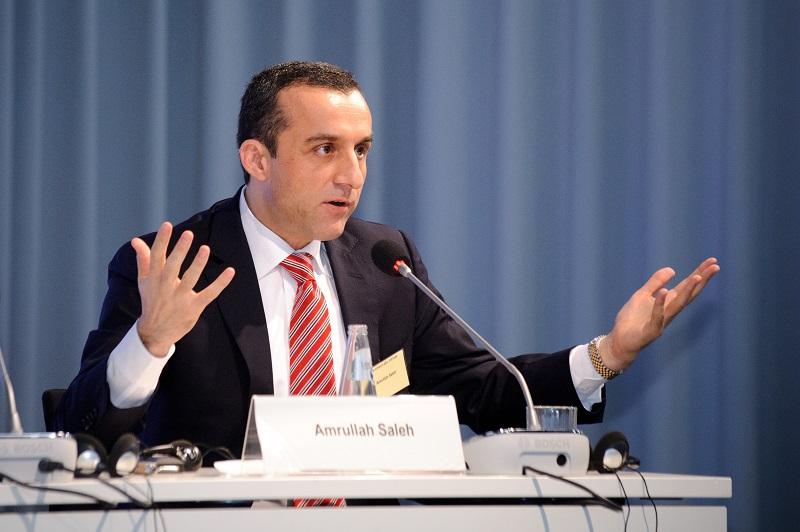
On August 15th, local time, the first vice president of Afghanistan, Amrullah Saleh, posted a dynamic statement on social networking sites, saying that he "will not bow to the Taliban under any circumstances". He also said that he "will not betray the soul and legacy of Afghan national hero Masood, will not disappoint the millions of people who follow him, and will not stand under the same roof with the Taliban".
Masood once served as the military leader of the Northern Alliance of Afghanistan, leading Tajik and Uzbek militia in the anti-Taliban struggle on 10% of the territory in northern Afghanistan. After the Taliban stepped down, Masood was posthumously awarded as "Afghan national hero".
Russian President and Uzbek President discussed the situation in Afghanistan by telephone.
On August 15th, local time, according to Russian President official website, Russian President Vladimir Putin had a telephone conversation with Uzbek President Mirziyoev. The two sides discussed the situation in Afghanistan in detail and decided to strengthen cooperation between Russian and Uzbek ministries and agencies.
British Prime Minister Johnson:No one wants Afghanistan to become a hotbed of terrorism.
According to the British Prime Minister’s Office, British Prime Minister Boris Johnson held an emergency meeting of the Cobra Cabinet on the afternoon of August 15th local time to discuss the current situation in Afghanistan.
After the emergency meeting, Boris Johnson said that the western society should work together to make the new Afghan government realize that "it is very important that no one wants Afghanistan to become a hotbed of terrorism."
French Presidential Palace: The safety of French citizens is the primary consideration in Afghanistan.
On the 15th, local time, the Elysee Palace, the presidential palace of France, told AFP that the absolute primary consideration in France at present is the safety of French citizens who are still in the local area and the staff of foreign institutions. At present, the French Embassy in Afghanistan has not been closed. But since April this year, France has been calling on French citizens in Afghanistan to leave Afghanistan.
Turkish President: Every effort will be made to ensure the stability of Afghanistan and the region.
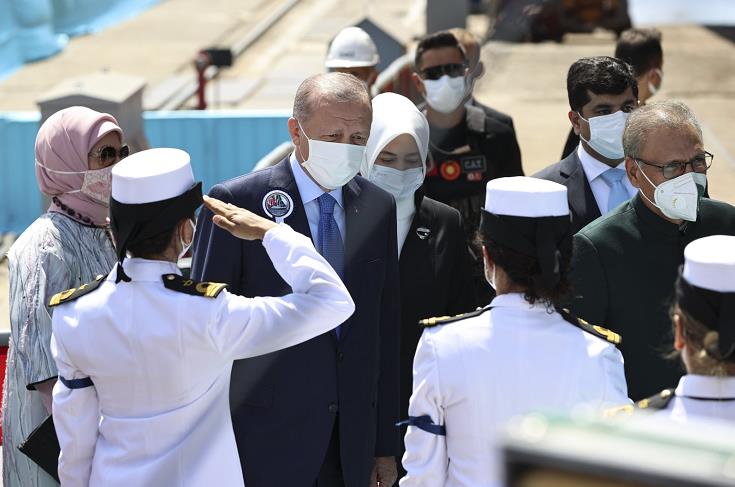
According to Turkish media reports, on August 15th, local time, Turkish President Erdogan and Pakistani President Alwi attended the handover ceremony of a light frigate in Istanbul. In his speech, Erdogan said that Turkey will make every effort to ensure the stability of Afghanistan and the region, and is willing to strengthen cooperation with Pakistan in this regard to prevent a large number of Afghan refugees from flooding into Turkey.
Iranian Foreign Minister: Violence and war cannot solve the problem.
According to the Yitong News Agency, on the 15th local time, Iranian Foreign Minister Zarif posted a message on social media about the situation in Afghanistan, saying, "Violence and war can never solve the problem like occupation. Iran welcomes the statement made by former Afghan President Hamid Karzai that Afghan leaders will form a coordination committee. " Zarif also said that Iran hopes that the Committee can promote dialogue and make a peaceful transition of power. Iran stands ready to continue its efforts to build peace.
Norwegian Foreign Ministry: Afghanistan may face a government vacuum.
On August 15th, local time, Norwegian Radio and Television Corporation (nrk) reported that Norwegian Foreign Minister Sered said that after Afghan President Ghani left Afghanistan, there were signs of a government vacuum in Afghanistan. "It is still unclear who is leading the Afghan government and commanding the Afghan security forces. Afghanistan may face a government vacuum, which is a very serious situation."
Former Danish Foreign Minister: We can’t build an alliance where the United States decides everything.
On August 15th, local time, Danish Radio and Television (DR) reported that former Danish Foreign Minister Per Stig Muller said on the same day: "If you want to form an alliance with the Americans, then you can’t completely decide whether you are going to war or running away."
From 2001 to 2010, he participated in the important decision about Denmark’s participation in the war in Afghanistan, but he was dissatisfied with the way the United States handled it. Muller said: "We were with them, but they never asked us, and we didn’t participate. We can’t build an alliance where only the United States decides everything. "
Ministry of Foreign Affairs of Qatar: Calling for the peaceful transfer of power between the Afghan government and the Taliban.
On the evening of 15th local time, the Ministry of Foreign Affairs of Qatar issued a statement calling on the Afghan government to hand over power to the Taliban and Pingdi. The statement said that a peaceful and smooth transition of power will pave the way for all Afghan parties to reach a comprehensive political reconciliation and ultimately achieve peace and stability in Afghanistan. The statement also called on all Afghan parties to immediately achieve a comprehensive and permanent ceasefire and ensure the security and territorial integrity of all Afghan people.